


Page 15 - Demo
P. 15
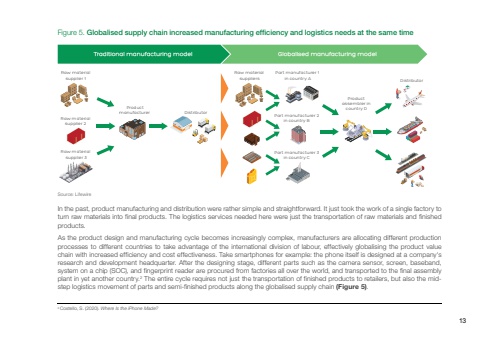
Figure 5. Globalised supply chain increased manufacturing efficiency and logistics needs at the same timeTraditional manufacturing model Globalised manufacturing modelRaw material supplier 1 Raw material suppliersProductassembler incountry DPart manufacturer 1 in country APart manufacturer 2in country BPart manufacturer 3in country CRaw material supplier 2 Raw material supplier 3Productmanufacturer DistributorDistributorSource: Lifewire2 Costello, S. (2020). Where Is the iPhone Made?In the past, product manufacturing and distribution were rather simple and straightforward. It just took the work of a single factory to turn raw materials into final products. The logistics services needed here were just the transportation of raw materials and finished products.As the product design and manufacturing cycle becomes increasingly complex, manufacturers are allocating different production processes to different countries to take advantage of the international division of labour, effectively globalising the product value chain with increased efficiency and cost effectiveness. Take smartphones for example: the phone itself is designed at a company's research and development headquarter. After the designing stage, different parts such as the camera sensor, screen, baseband, system on a chip (SOC), and fingerprint reader are procured from factories all over the world, and transported to the final assembly plant in yet another country.2 The entire cycle requires not just the transportation of finished products to retailers, but also the midstep logistics movement of parts and semi-finished products along the globalised supply chain (Figure 5).13


