


Page 153 - Arts Innovation Report_2022_May11
P. 153
Preface
                                                                                                                    前 言


                                                                                                                    CH. 1
           成立於 2020 年的藝術科技專責小組,本應制訂並發                       The Arts Tech Task Force effective as of 2020 was supposed to   第一章
                                                            be accountable for devising an Arts Tech strategy that includes
           布推廣藝術科技的策略和措施,然而至今仍未公布進
                                                            a manpower plan, but no concrete plans have been announced
           一步的細節。                                                                                                   CH. 2
                                                            up till today.                                          第二章
           重要的是,政府需制定並實施文創產業的未來人才策
                                                            It is of utmost importance that a government-initiated strategy
           略,以確保該行業的競爭力。我們建議政府透過藝術                                                                                  CH. 3
                                                            on future CCI talents is devised, and implemented, to ensure a
                                                                                                                    第三章
           科技專責小組,為文創產業制訂長遠人才發展規劃,                          competitive future of the industry. We recommend the
           並且注重數字化和沉浸式趨勢下所需的技能,提升香                          Government—via the new bureau, the Arts Tech Task Force or   CH. 4
                                              61
           港文創產業實力,讓大家都可參與其中。                               otherwise, formulate a long-term manpower planning roadmap
                                                                                                                    第四章
                                                            to galvanise the sector and expedite training. This farsighted
                                                            Human Resources Strategy for CCI development shall draw
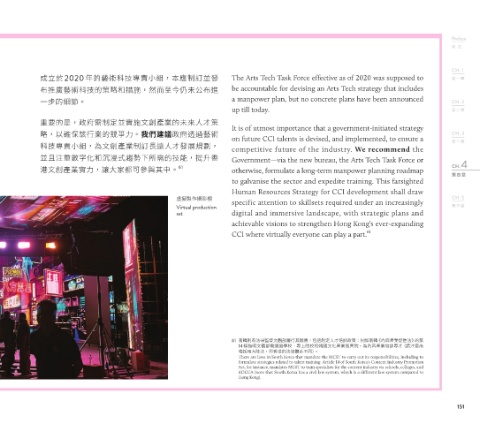
                                              虛擬製作攝影棚       specific attention to skillsets required under an increasingly   CH. 5
                                              Virtual production                                                    第五章
                                              set           digital and immersive landscape, with strategic plans and
                                                            achievable visions to strengthen Hong Kong’s ever-expanding
                                                            CCI where virtually everyone can play a part. 61


                                                            61  南韓則有法律監督文觀部履行其職責,包括制定人才培訓政策:例如南韓《內容產業促進法》的第
                                                              14條指明文觀部需通過學校、專上院校和韓國文化產業振興院,為內容產業培訓專才(請注意南
                                                              韓採用大陸法,與香港的法律體系不同)。
                                                               There are laws in South Korea that mandate the MCST to carry out its responsibilities, including to
                                                              formulate strategies related to talent training: Article 14 of South Korea's Content Industry Promotion
                                                              Act, for instance, mandates MCST to train specialists for the content industry via schools, colleges, and
                                                              KOCCA (note that South Korea has a civil law system, which is a different law system compared to
                                                              Hong Kong).

                                                                                                                     151

